Hand bakery
Machines exist for almost everything. We still take craft literally — dough folded by hand, crusts scored by eye.
Handgebäck & rolls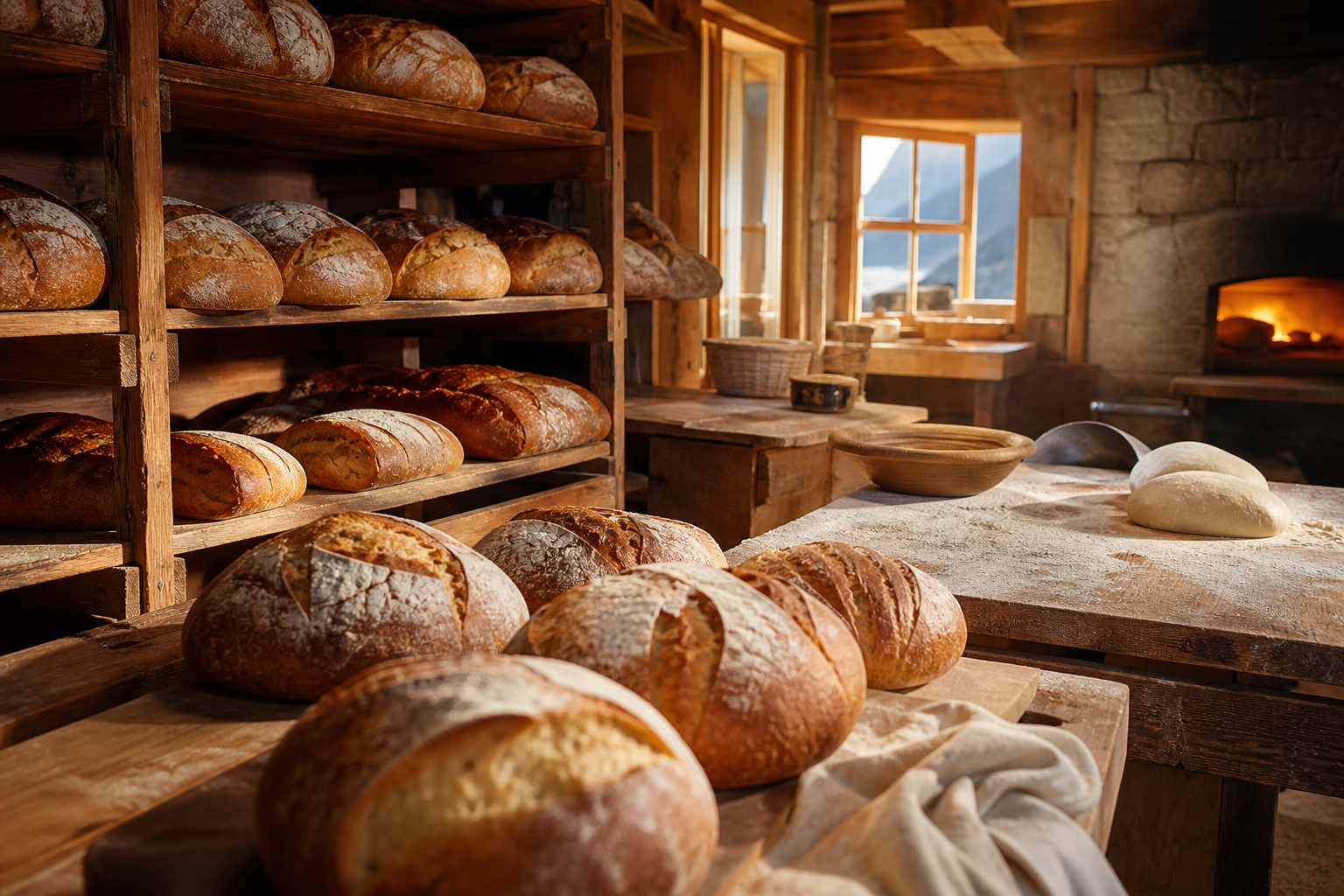
Backstube Lärche
Regional flour, long rests, and a quiet oven before the city wakes — bread made with time in Innsbruck.
Machines exist for almost everything. We still take craft literally — dough folded by hand, crusts scored by eye.
Handgebäck & rollsAlmost everything you wanted to know about flour, sourdough, and why we refuse to rush a loaf.
Read our storyLike starting work when everyone else is still asleep? The bakehouse keeps early hours for patient hands.
Find usWhen I enter the bakehouse in the early hours, Innsbruck is still quiet. Only the scent of ripe sourdough, warm timber, and freshly milled flour greets me. In those moments I feel most clearly why this craft matters: good bread needs people who take their time.
I believe in slow processes in a fast world. In quality instead of hurry. In regional grain and honest handwork — and that a good loaf brings people together.
That is what I stand up for every morning.
— Lena Holzer, baker
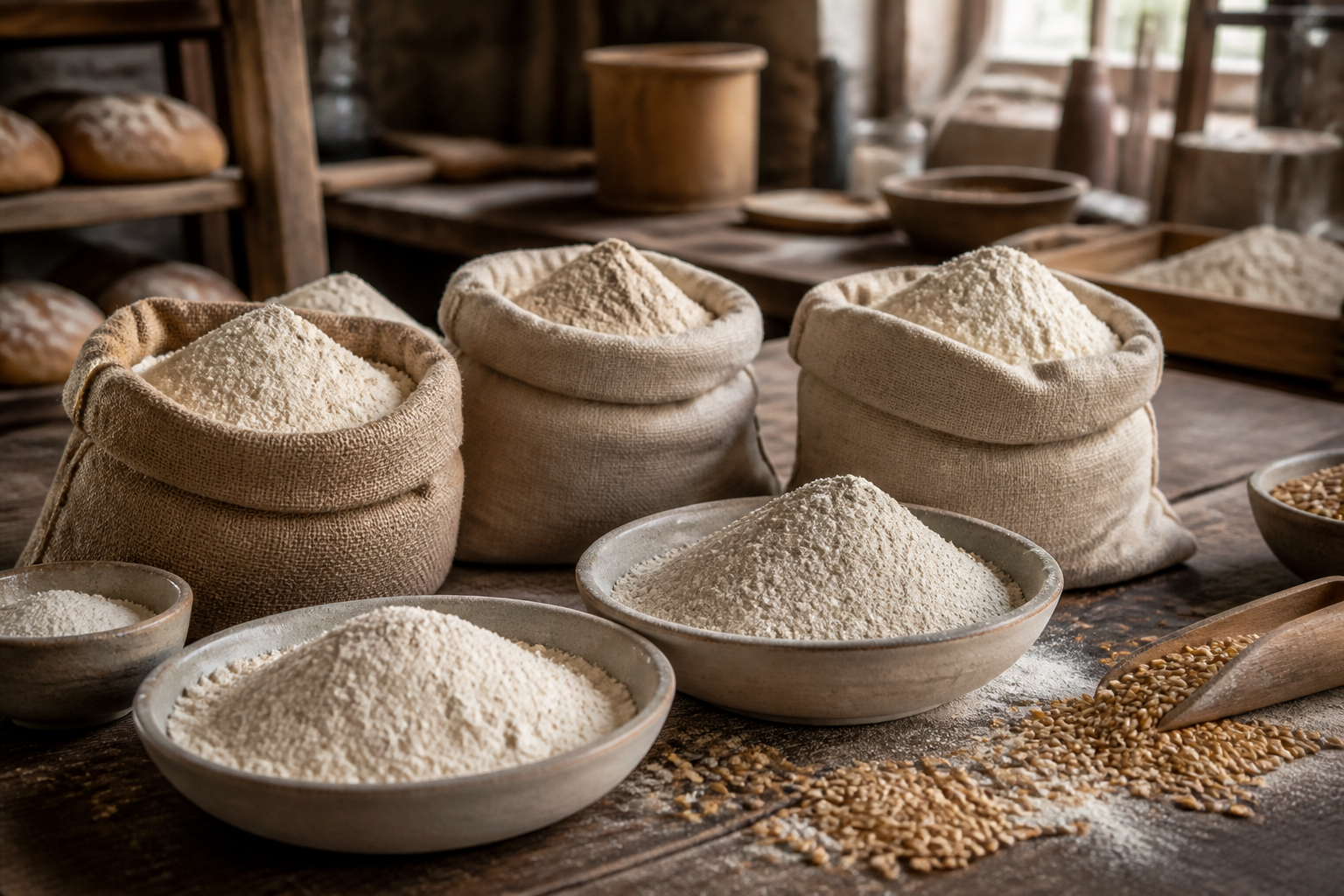
We buy grain from regional mills and farms we have worked with for years — people who care as carefully as we do.
The kernels grow in Tyrolean and Inn Valley fields, in our climate, near our oven. That proximity tastes different: deeper crust, clearer crumb, bread that belongs here.
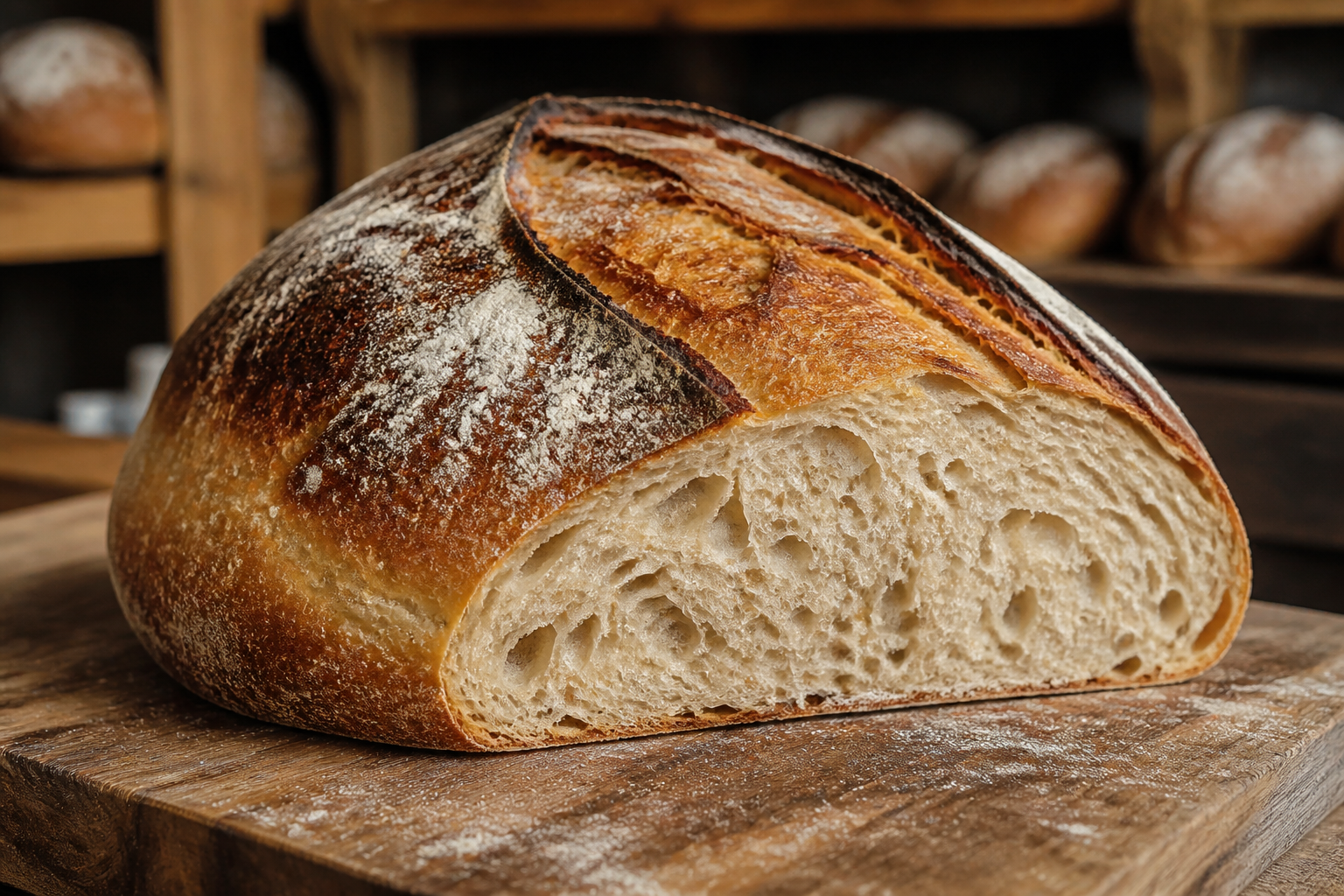
It breathes. It asks for attention and patience. No industrial shortcut replaces what a matured starter brings to a loaf: depth, digestibility, a crust with character.
When we lead the dough, we accompany it rather than control it — the same way bakers before us learned to listen.
Many customers say our rolls taste “like they used to.” Perhaps because we still make them that way: with preferment, rest, and real handwork.
A roll is a simple bake — and that is exactly why it reveals how much care went into it.
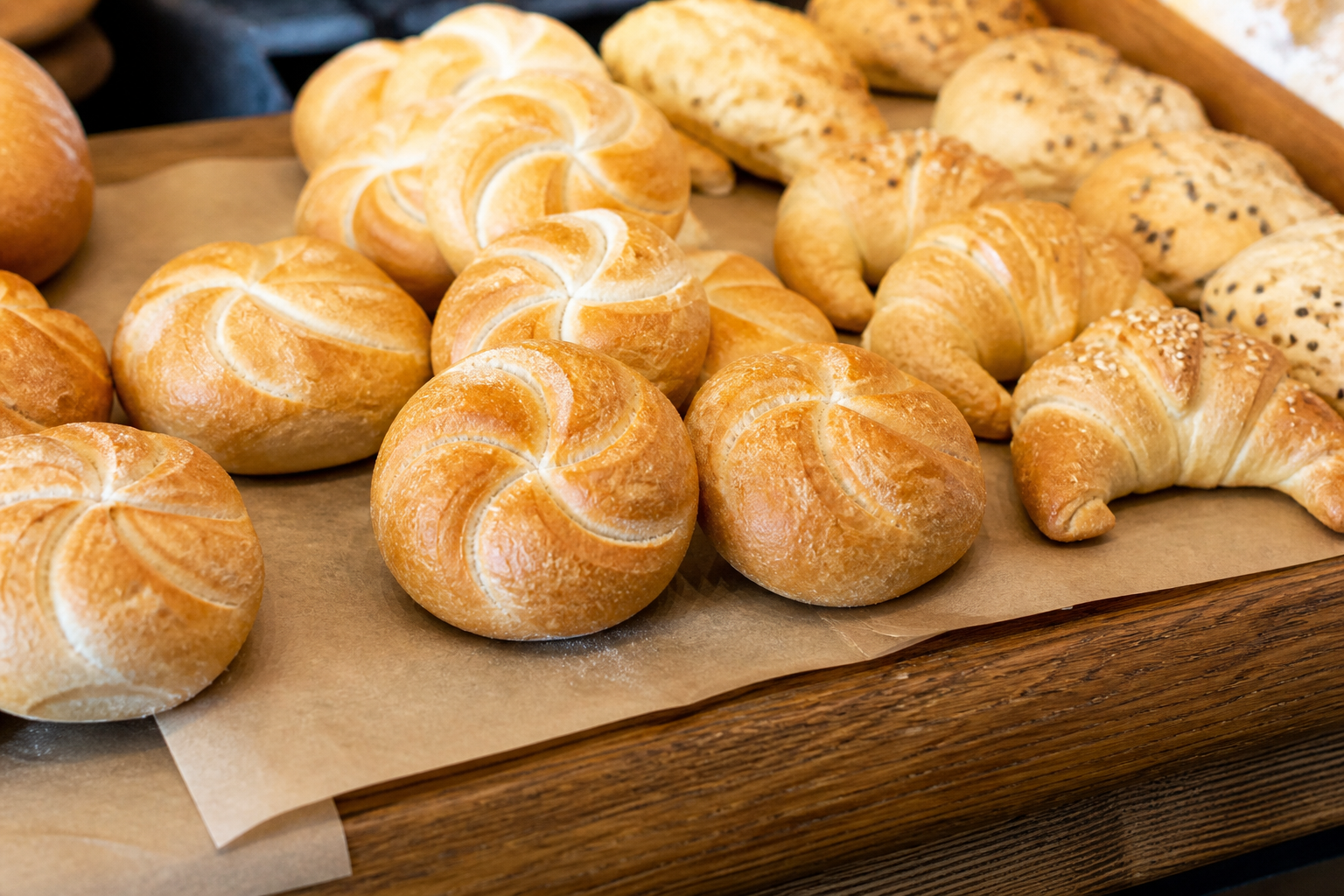
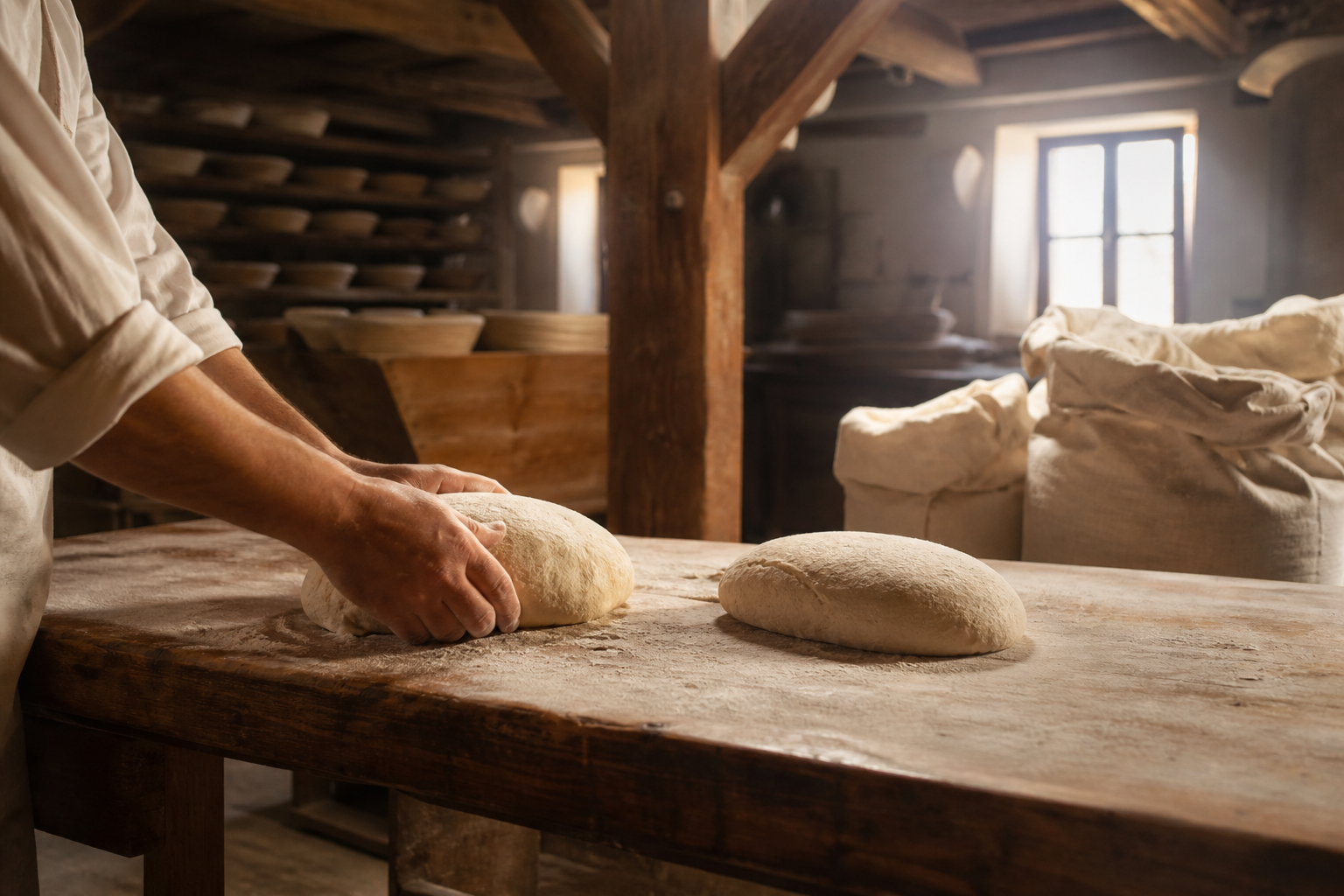
It may also be breakfast. Warm rolls, butter, apricot jam, and coffee at a small timber counter — or a loaf taken home while the crust still sings.
We bake for the morning queue and for the evening table. Come early for the widest choice; come later for the quiet.
Staying with traditional handwork means we work with our hands — a lot. Our mixers are old enough to have stories. That is who we are.
Not only sourdough needs time to become alive and unfold its potential. Our team does too. Most recipes still follow the same patient logic: long fermentation, fewer shortcuts, bread people drive across the valley for because it sits better with them.
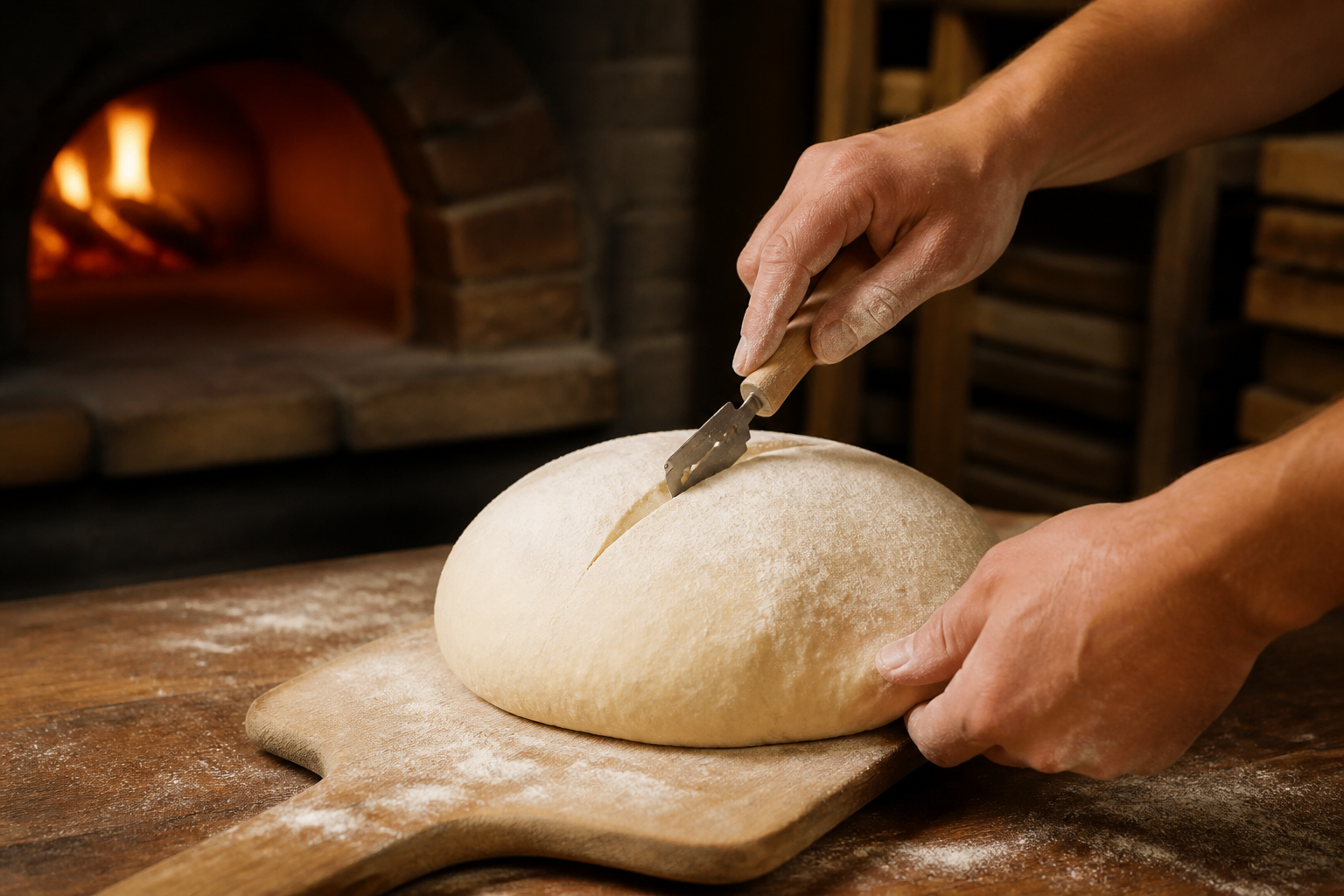
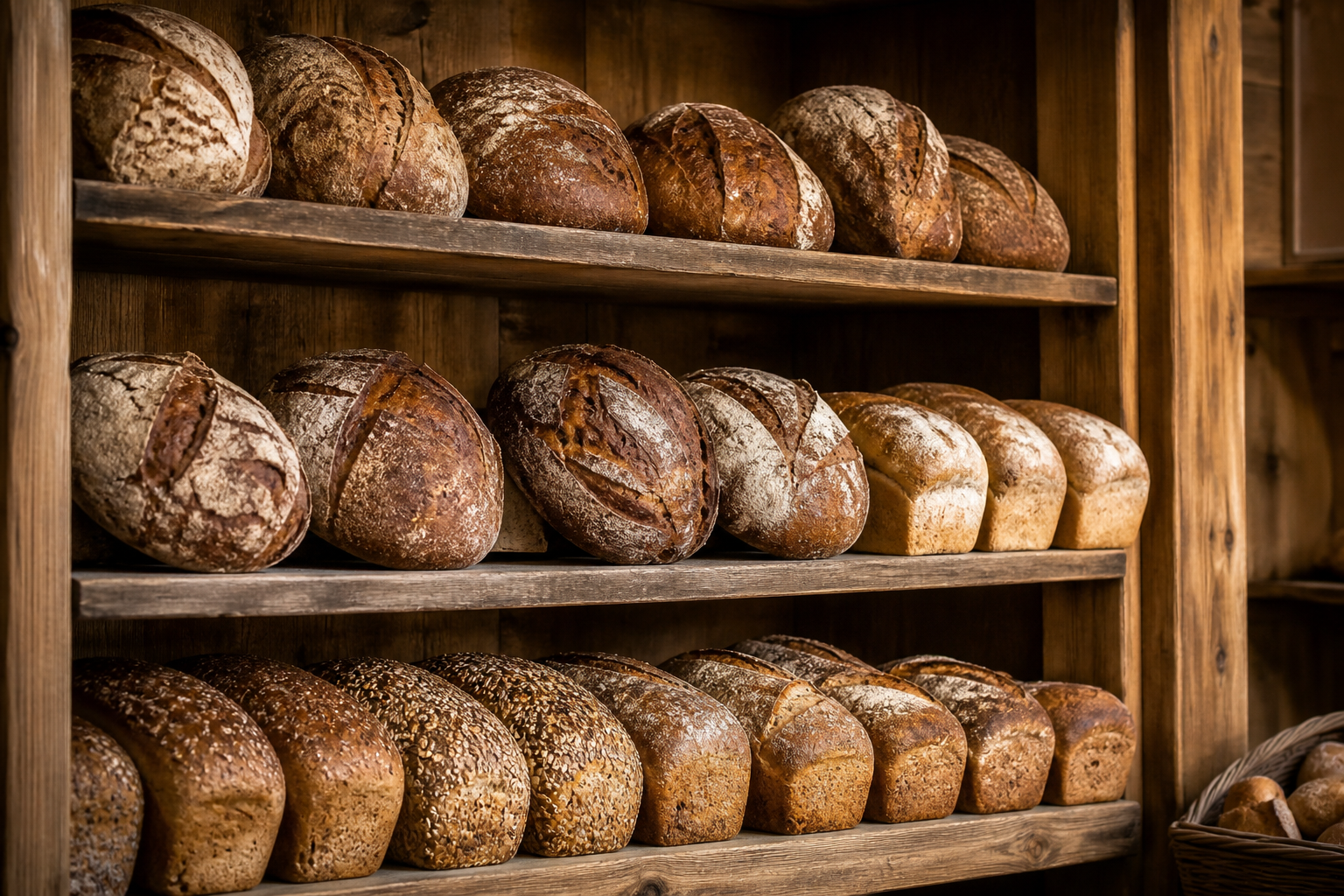
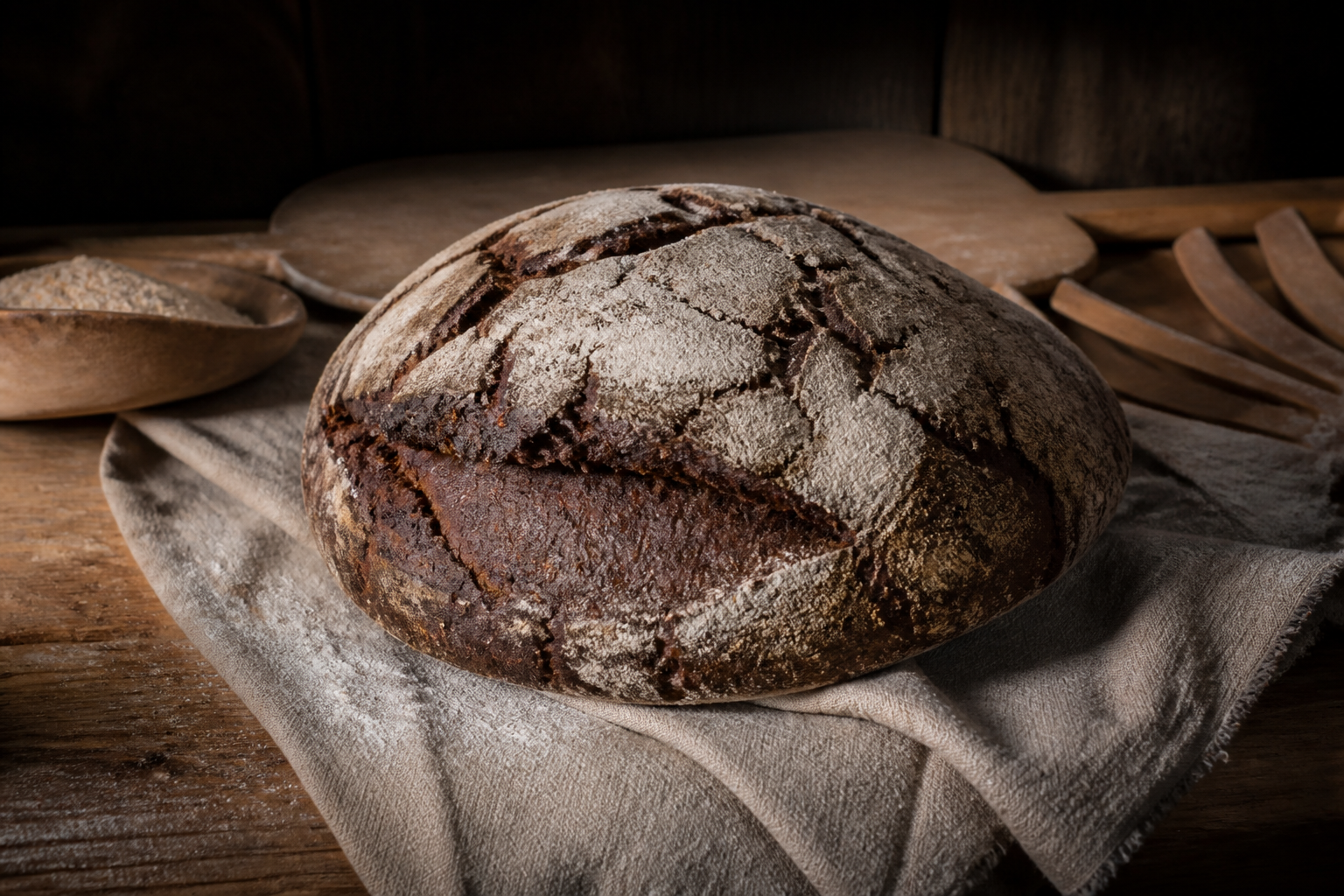
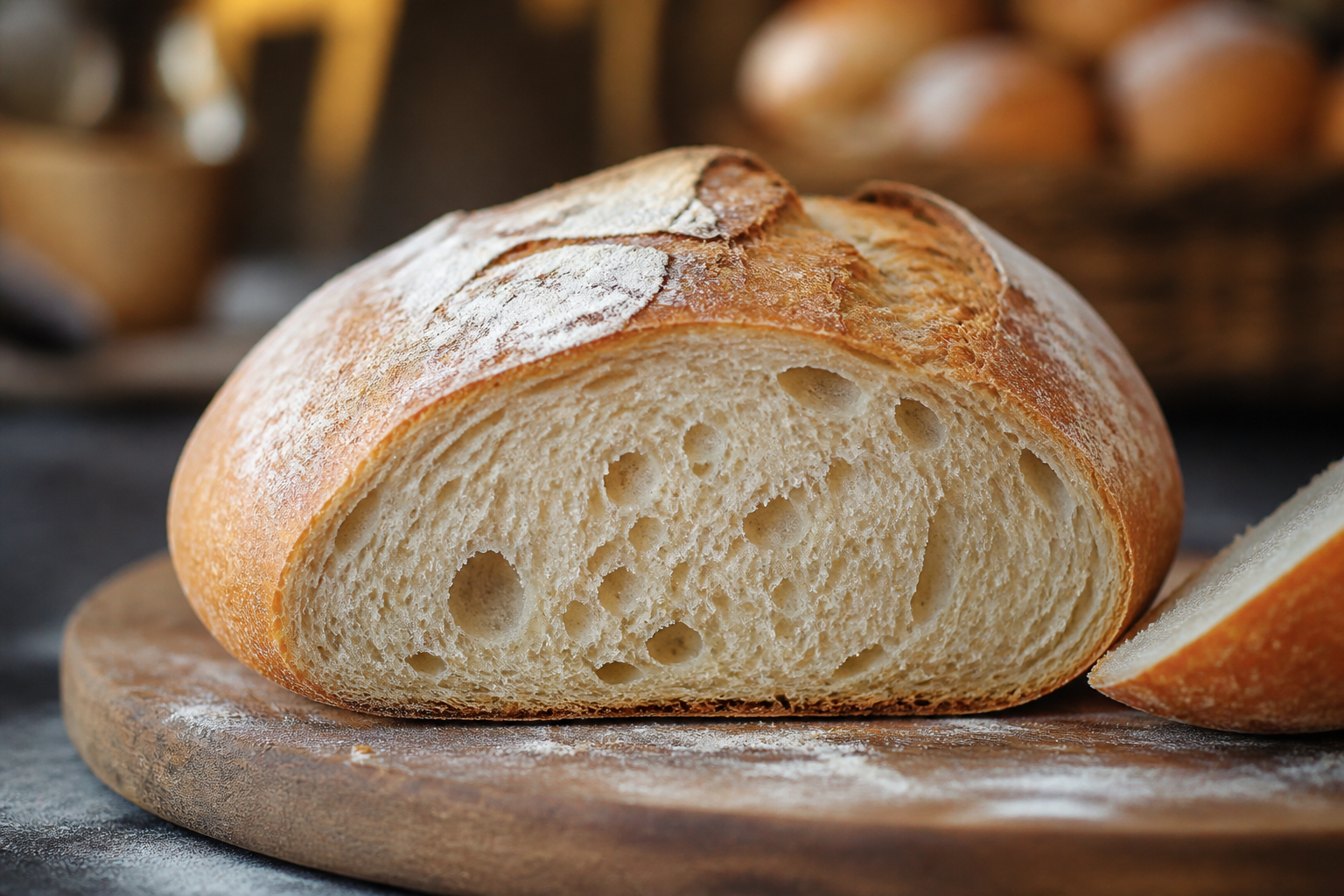
Yeast is a natural microorganism. In dough it ferments sugars and forms carbon dioxide that lifts the loaf. Heat in the oven stops its activity. With long fermentation we use far less yeast, because natural fermentation develops its own strength — and better flavour.
For most people wheat is fine. Time is the key: during a long rest, enzymes and microbes break down fermentable carbohydrates that can bother sensitive digests. Traditional, unhurried wheat bread is often gentler than industrial fast loaves. Sourdough is more than a raiser — it is living tradition.
Cold speeds staling. Starch crystallises and the crumb turns dry and dull. At room temperature in a linen bag or bread box, flavour lasts longer. Freezing works well; the refrigerator does not. Bread is honest — give it time and careful ingredients, and it shows what is inside.
Warm loaves from early morning. Ask at the counter what came out of the oven today.